

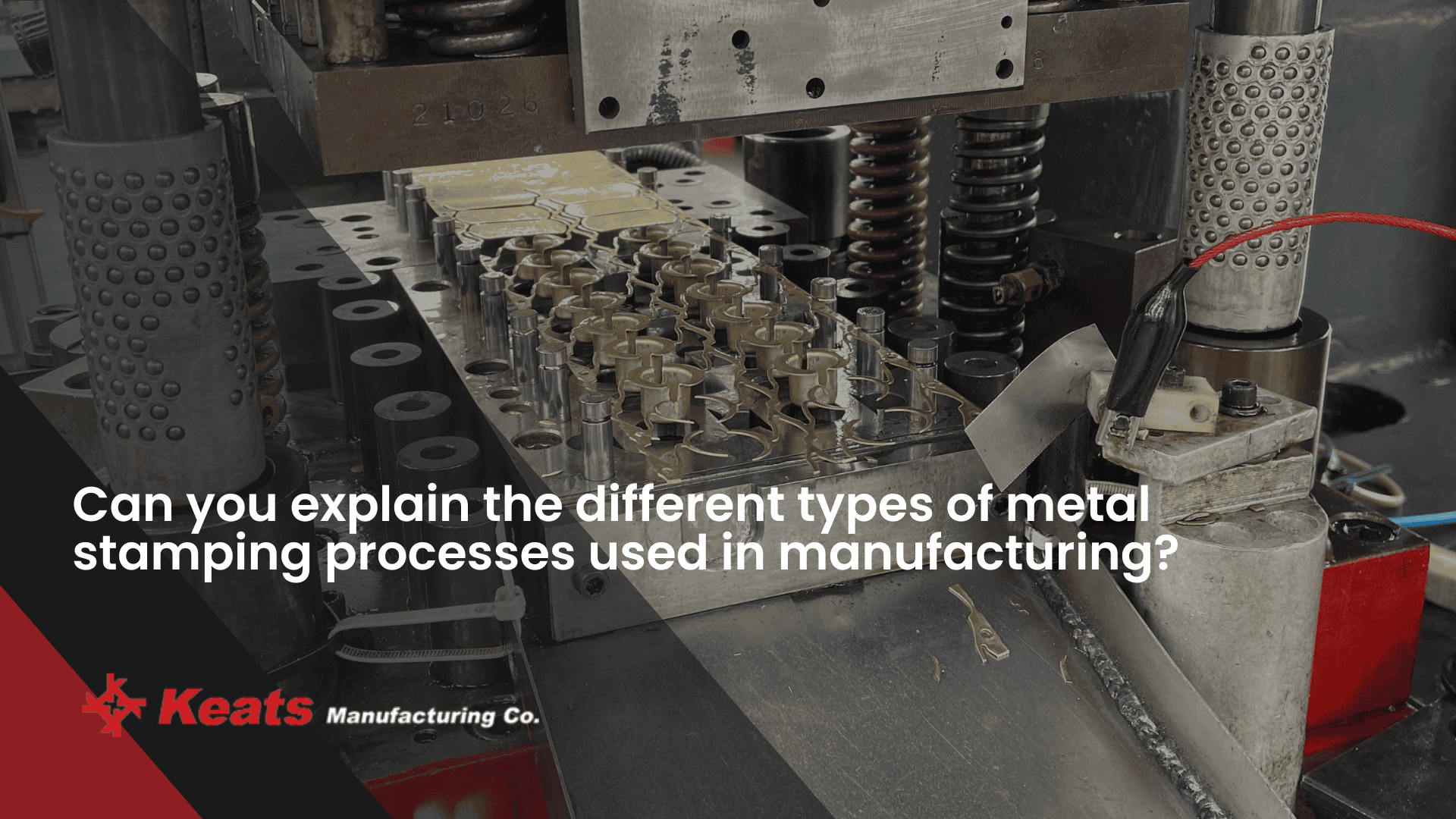
In the realm of industrial manufacturing, the metal stamping process is a cornerstone technique that enables the production of high-precision components across various sectors. Whether it’s automotive, aerospace, or medical devices, understanding the different types of metal stamping processes can significantly impact production efficiency and product quality. This article delves into the intricacies of metal stamping, exploring its applications, mechanics, and specific processes tailored for diverse industries.
What is the process of stamping in manufacturing?
The metal stamping process is a manufacturing technique that involves the use of dies and presses to shape metal sheets into desired forms. This process is significant due to its ability to produce high-volume parts with exceptional accuracy and repeatability. The metal stamping process, step by step, typically includes blanking, piercing, bending, and forming, resulting in a wide array of components used in various applications.
Applications of Metal Stamping
Components like brackets, clips, and electrical terminals.
Parts requiring high volume / low cost components.
Custom assemblies and wire forms for critical applications.
Terminals and bus bars for efficient power distribution.
These applications highlight the versatility and importance of metal stamping in modern manufacturing.
What are the different types of metal stampings?
In the context of metal stamping, various part types are produced to meet specific industry requirements. At Keats Manufacturing Co., we specialize in producing metal stamping examples such as:
- Electrical Terminals: for EVs, automotive steering wheel sensor terminals, and circuit breaker terminals. Terminals are generally crucial for power distribution.
- Brackets: are used to hold other components in place for all industries.
- Clips for Vehicles: using four-slide stamping used to hold vehicle trim and wires
- Custom beryllium copper spring contact: for hearing aids and automotive electrical contacts and connectors.
- Heat Shields: for EVs and engine fuel injection shields.
These diverse types of stamping processes and applications enable us to cater to a wide range of client needs across automotive, aerospace, medical device, and electrical distribution industries. Each component represents our commitment to precision and excellence in custom metal fabrication.
How does sheet metal stamping work?
Sheet metal stamping involves the manipulation of flat metal sheets into various shapes and forms. The mechanics of this process include:
Material Selection
Choosing the right metal, such as steel, aluminium, or brass.
Die Design
Creating custom dies that shape the metal according to specifications.
Press Operation
Using hydraulic or mechanical presses to apply force to the metal sheet.
Advantages of Sheet Metal Stamping
- High Precision: Achieves tight tolerances, essential for components in critical applications.
- Cost-Effectiveness: Ideal for high-volume production, reducing per-unit costs.
- Flexibility: Capable of producing complex geometries and custom designs.
The metal stamping process, step by step, ensures that each component meets stringent quality standards, contributing to the overall efficiency of production.
What are the steps in the stamping method?
The metal stamping process, step by step consists of key stages that ensure precision and quality in every component produced:
| Stage | Description |
|---|---|
| Design | Creating detailed CAD drawings of the part. |
| Tooling | Developing the necessary dies and tools for production. |
| Material Preparation | Sourcing and preparing the metal sheets. |
| Stamping | Applying force to shape the metal. |
| Secondary Operations | Performing additional processes such as bending or punching. |
| Quality Inspection | Ensuring parts meet specifications through rigorous testing. |
| Packaging and Delivery | Preparing parts for shipment to clients. |
Each step is crucial in ensuring quality and efficiency, aligning with our commitment to delivering custom small metal stampings and wire forms with the highest standards.
How does the stamping process in car manufacturing differ from other industries?
The stamping process in car manufacturing is particularly demanding, requiring adherence to strict industry standards, such as IATF 16949 certification. This certification ensures that suppliers meet the rigorous quality management requirements essential for automotive components.
Comparison with Other Industries
Automotive: Emphasizes high-volume production, tight tolerances, and compliance with safety standards.
Appliance: Focuses on high-volume / low-cost parts.
Medical Devices: Prioritizes precision and biocompatibility for safety.
The specific requirements and challenges faced in car manufacturing underscore the importance of a specialised approach to metal stamping, ensuring reliability and performance in critical applications.
Types of Metal Stamping Processes
Multi-Slide and Four-Slide Stamping
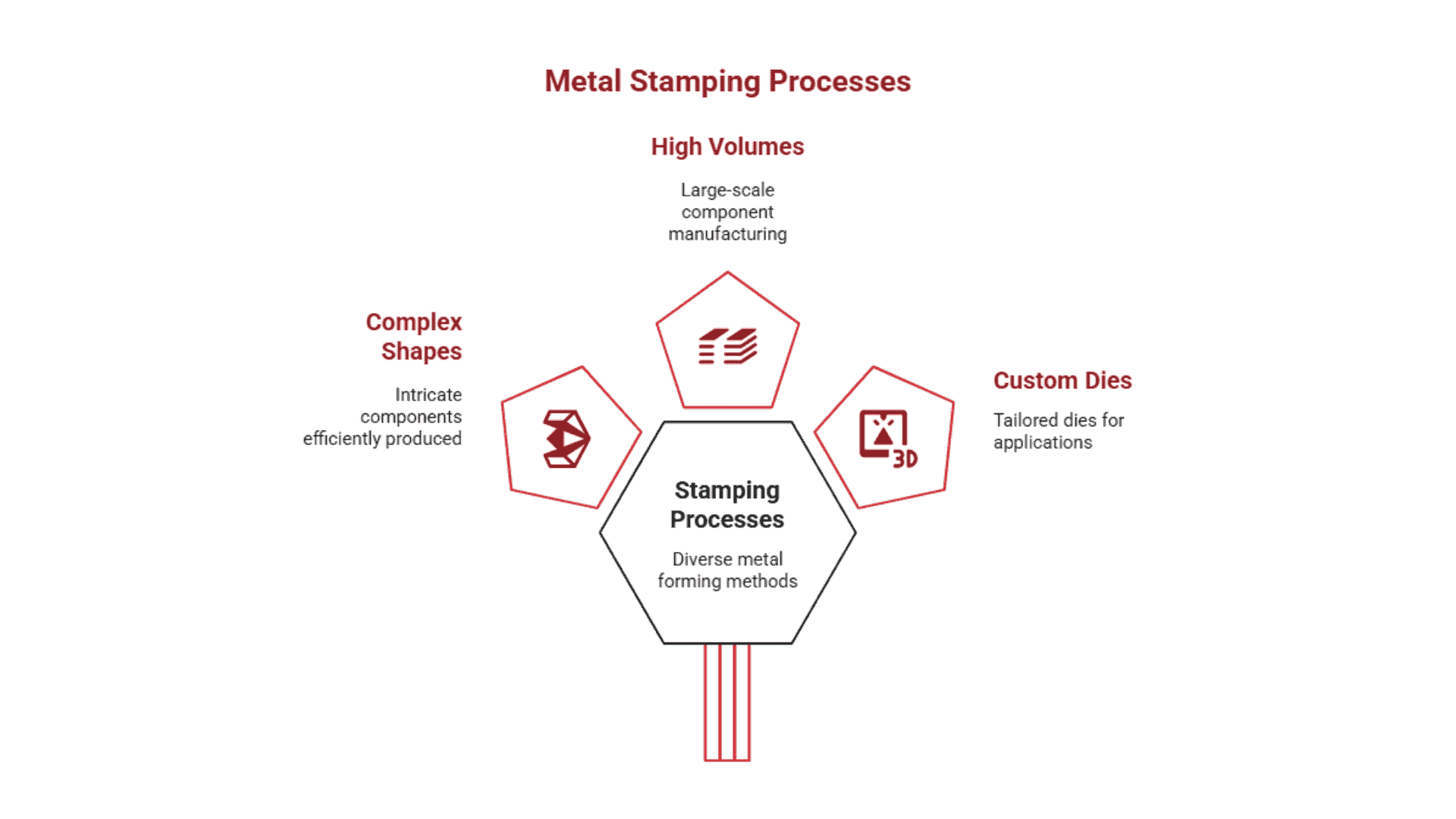
These processes employ multiple slides actuated by cams or servomotors to perform stamping and forming operations from various directions, enabling the production of complex shapes and bends at high volumes. Our ownership of one of the largest fleets of four-slide machines in North America, including unique Wünsch multi-slide machines, enhances our capability to produce intricate components efficiently.
When evaluating multi-slide capabilities, it’s helpful to understand how they compare to progressive die approaches in terms of tooling, part complexity, and production volume. Our blog Difference Between Multi-Slide and Progressive Die Stamping, breaks down these differences in detail.
Progressive Die Stamping
This method involves a series of workstations, each performing different operations on the metal piece, allowing for the creation of complex components efficiently. Our in-house tool and die development ensures that we can create custom dies tailored to specific applications, backed by a lifetime guarantee.
Custom Metal Stamping Operations
We offer a range of stamping operations, including blanking, bending, punching, coining, drawing, embossing, piercing, and curling, to meet diverse customer requirements. Our extensive high-precision tolerances (±0.0002 in.) ensure that every component meets the highest quality standards.
Frequently Asked Questions
What are the main types of metal stamping processes used in manufacturing?
Metal stamping processes are essential in manufacturing for creating precise metal components. Key types include:
- Progressive Die Stamping: Utilizes a series of stations to progressively shape the metal.
- Deep Draw Stamping: Forms complex, deep shapes by drawing the metal into a die.
- Transfer Die Stamping: Moves individual parts between stations for separate operations.
- Four-Slide Stamping: Offers versatility with multiple slides for intricate bends and cuts.
These processes enable high efficiency and precision in metal fabrication.
How does progressive stamping work in manufacturing?
Progressive stamping is a manufacturing process used for creating complex metal parts efficiently. It involves several stages, each performing a specific operation on a metal strip as it unrolls through a series of dies. Key elements include:
- Multiple stations in sequence, each with a unique function.
- Continuous feed of metal strip through the die.
- Efficient production of intricate parts with high precision.
- Reduced waste and cost-effective for high-volume manufacturing.
What advantages does four-slide stamping provide?
Four-slide stamping offers several advantages for manufacturing:
- Complex Designs: Ideal for intricate parts with multiple bends.
- Efficiency: Simultaneous operations reduce production time.
- Cost-Effective: Minimizes material waste and tooling costs.
- Flexibility: Easily adaptable to design changes.
- Precision: Ensures high accuracy and consistency in parts.
These benefits make four-slide stamping a valuable choice for complex metal components.
Can you explain the deep drawing process?
Deep drawing is a metal stamping technique we excel in at Keats Manufacturing Co., used to form deep, cylindrical parts.
- This process enables the production of complex geometries while optimizing material usage.
- Our advanced machinery, including our unique Wünsch multi-slide machines, allows us to achieve precise dimensions of ±0.0005 in., ensuring consistency and reliability in the parts we manufacture.
- We have a proven track record of delivering deep-drawn components tailored for diverse applications across multiple sectors.
What role does tool and die development play in metal stamping?
Tool and die development is crucial in metal stamping, ensuring precision and efficiency.
- Designs custom tools and dies tailored to specific components
- Enhances production speed while maintaining accuracy
- Reduces material waste and operational costs
- Supports complex geometries and tight tolerances
- Increases overall product quality and consistency.
By investing in advanced tool and die development, manufacturers can achieve superior performance and reliability in their stamping processes.
How do you ensure precision in metal stamping?
Precision in metal stamping is ensured through:
- Rigorous quality control measures, including regular inspections and testing.
- Utilizing advanced computer-aided design (CAD) software for accurate die design.
- Employing state-of-the-art machinery equipped with precision tools.
- Continuous training for operators to maintain high skill levels.
- Implementing statistical process control to monitor production consistency.
- Regular maintenance and calibration of equipment to prevent deviations.
These practices help achieve consistent, high-quality results.
What industries benefit from your metal stamping services?
Keats Manufacturing Co. serves a wide range of industries with our metal stamping services, including:
- Automotive
- Electrical distribution
- Appliance
- Industrial
- HVAC
- Medical
- Telecommunications
- Solar and renewable energy
- Irrigation
- General machinery
How do you handle high-volume production needs?
At Keats Manufacturing Co., we handle high-volume production needs through:
- Advanced automation technologies, such as our unique Wünsch multi-slide machines, that enhance production speed and consistency in metal stamping.
- A dedicated team of engineers focused on optimizing workflows for increased output, ensuring efficient use of our extensive fleet of four-slide machines.
- Robust quality control measures, including certification in ISO 9001 and IATF 16949, that ensure each batch meets our rigorous standards.
- 3 Shifts working 24 hours per day.