

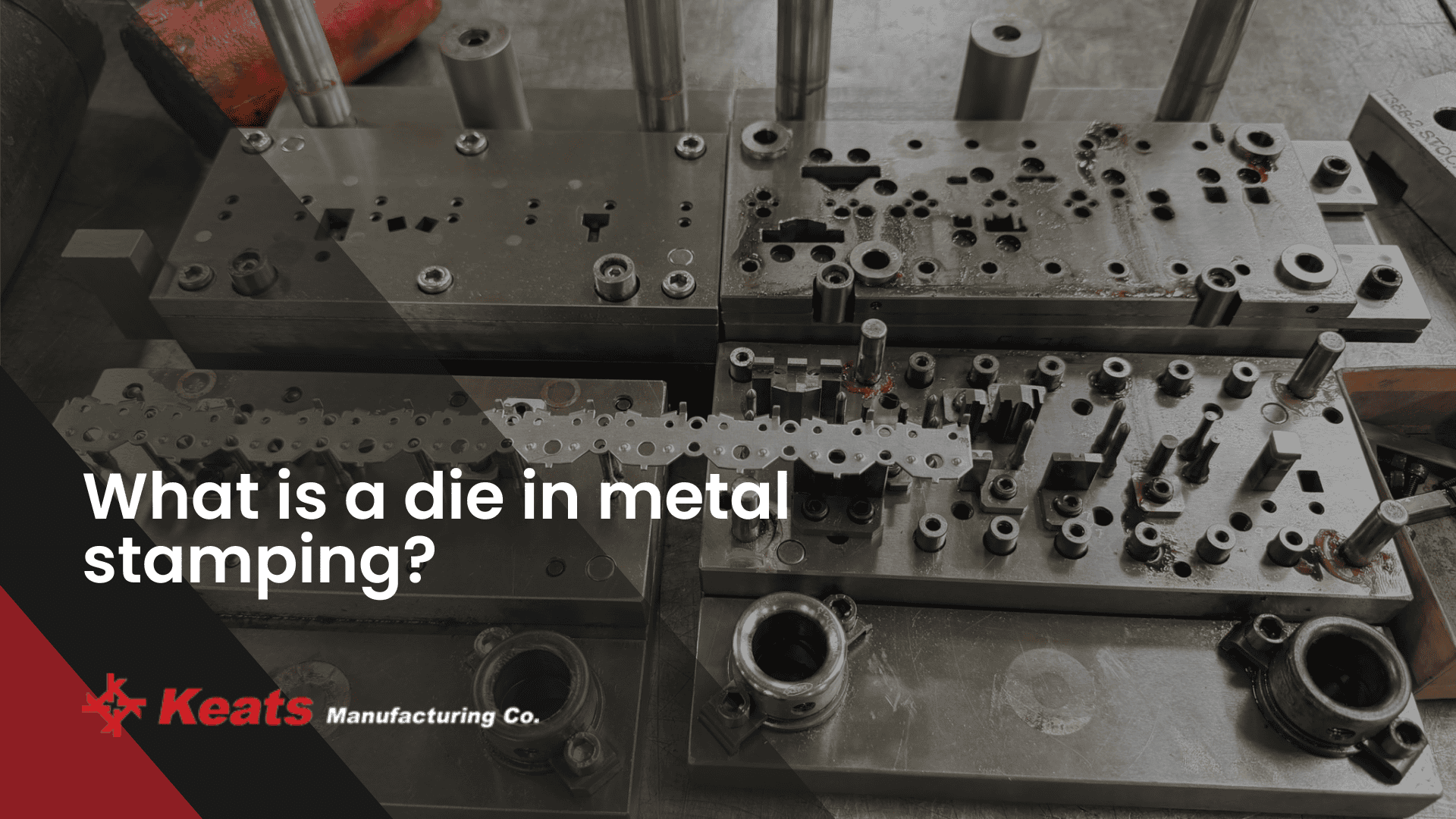
The die is the essential element in any metal stamping operation, defining the geometry and precision of the final component. Understanding the function of this specialized tool is vital for manufacturers focusing on high-volume production and complex parts, as specialized machine tooling has allowed for the mass production of durable, high-quality items. This article provides a comprehensive overview of how this specialized component functions within precision metal stamping and how leading Metal Stamping Companies leverage superior design and technical expertise to ensure stringent quality, consistent component accuracy, and supply chain control.
What is a metal stamping die?
It is the customized equipment used within a power press or similar machine that applies force to cut, form, draw, or pierce raw sheet metal into a finished part. Dies are highly calibrated instruments that consist of a customized metal cavity designed to help shape the target material. This component is critical for transferring the immense pressure from the machine slide to the metal strip during the metal stamping operation. Dies are an essential part of the overall tooling assembly engineered for a specific part.
What is the purpose of a die?
The primary purpose of a die in the manufacturing process is to execute precise operations that transform raw material into components. The manufacturing process known as what is die stamping uses these specialized instruments to achieve the required cuts, bends, and forms. Dies are fundamental to ensuring mass-produced parts maintain consistent dimensional accuracy, which is essential for meeting the requirements of complex components and preventing part failure.
0.0002”
Precision Standard
High-quality tooling and practices enable manufacturers to maintain extremely tight tolerances of up to 0.0002” during every step of the production process. This specialized tooling maximizes efficiency by minimizing raw material usage, leading to substantial material cost savings.
What is a die in metal stamping?
A die in metal stamping is a specialized tool engineered to perform specific manufacturing processes, with the most common types of stamping dies distinguished by how they conduct sequential operations. These complex tools are essential to transforming raw material into finished components. For instance, progressive die tooling involves the use of successive forming or stamping operations on a single metal strip. The finished part is cut away from the strip only at the end of the progressive process. Alternatively, four-slide or multi-slide tooling uses four slides that move laterally, forming complex shapes simultaneously by striking the metal workpiece from four orthogonal directions. Dies are engineered to execute fundamental processes such as piercing (creating holes or slots), blanking (cutting the outside contours of a workpiece), or forming (bending the material).
Each die configuration supports different production strategies depending on part complexity and volume. Our blog Compound vs. Progressive vs. Transfer Die, breaks down how these tooling approaches compare and when each is most efficient.
What’s the difference between a tool and a die?
In metal stamping terminology, tooling is the broad, general term for all equipment engineered for a specific component, encompassing dies, punches, and related fixtures. The die is the essential physical part of this tooling, serving as the customized metal cavity used to form, cut, or pierce the sheet metal. The punch functions alongside the die as the element that pushes the material through this die cavity to achieve the specified shape or pattern. Because specialized machine tooling allows manufacturers to mass-produce precise, durable components economically, quality tooling remains one of the most valuable resources in the manufacturing industry.
Stamping die components and design
Progressive stamping dies may look like a single block of steel from the outside, but inside they are highly engineered systems made up of many interdependent components. Each element plays a specific role—from supporting and guiding the die set to cutting, forming, and tracking the strip as it moves through each station. Understanding these key components helps explain how progressive dies achieve high speeds, tight tolerances, and consistent part quality over long production runs.
Key Components of a Progressive Stamping Die
1. Structural Base Components
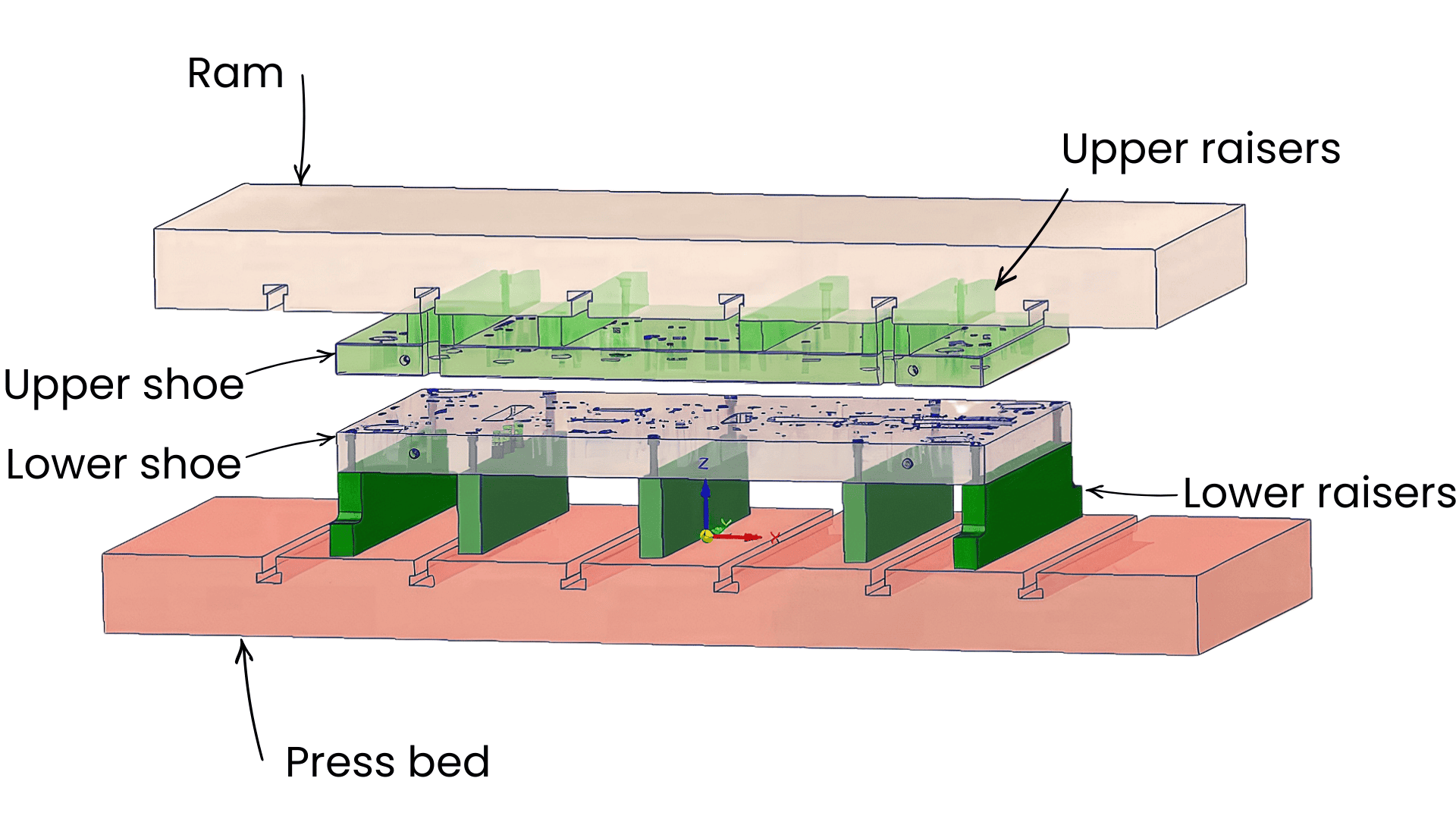
The structural base of a progressive stamping die consists of the upper and lower die shoes, which support and locate all other components. The lower shoe mounts to the press bed (often on a bolster plate), while the upper shoe mounts to the press ram, creating a rigid, stable foundation for accurate, repeatable stamping.
2. Guiding & Alignment Components
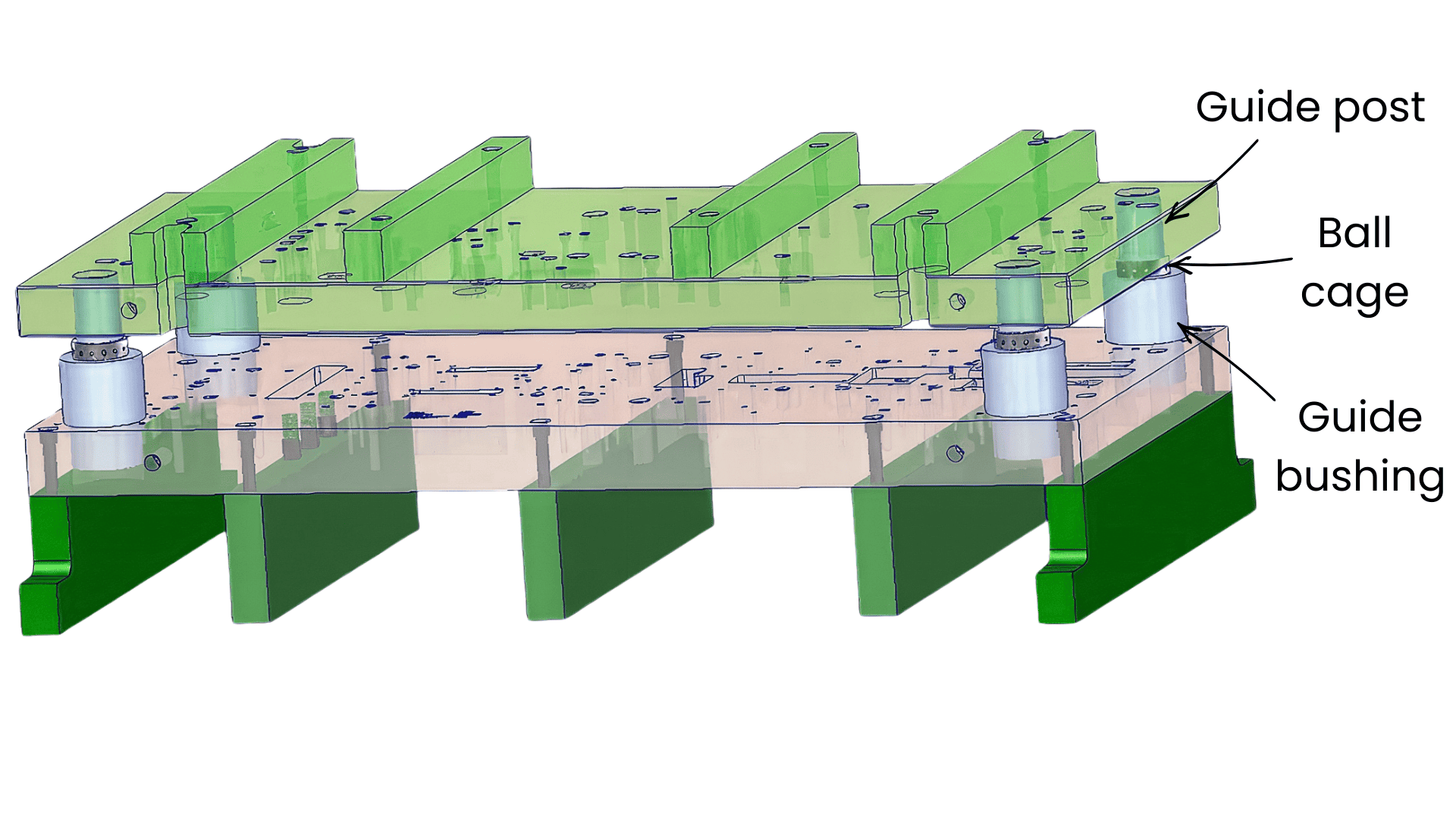
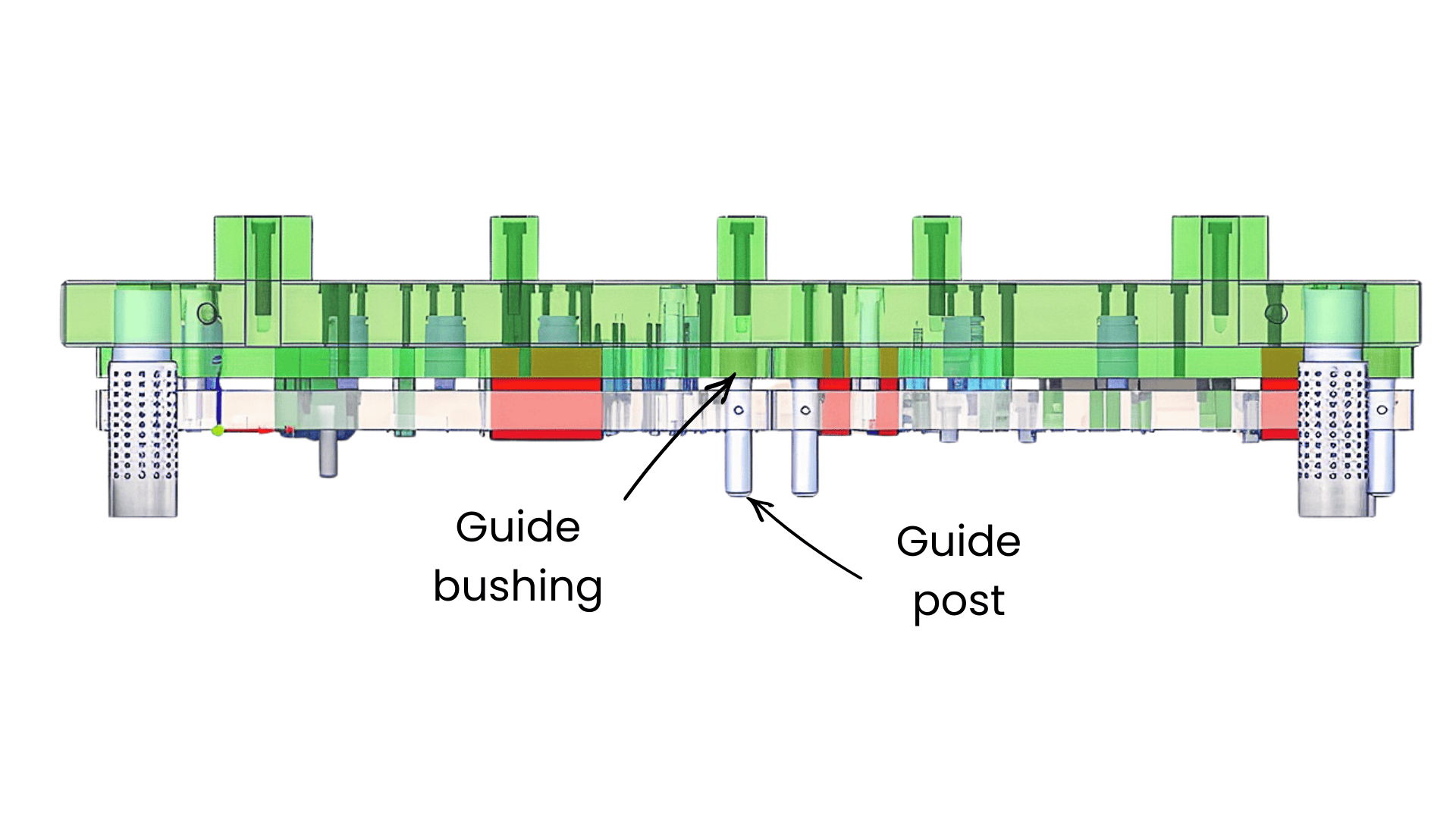
Guide posts and bushings keep the upper and lower die shoes perfectly aligned throughout the press stroke, ensuring tight tolerances and long tool life. Additional alignment features like heel blocks or heel plates help control side thrust during forming, protecting both the die and the press.
3. Cutting & Forming Components
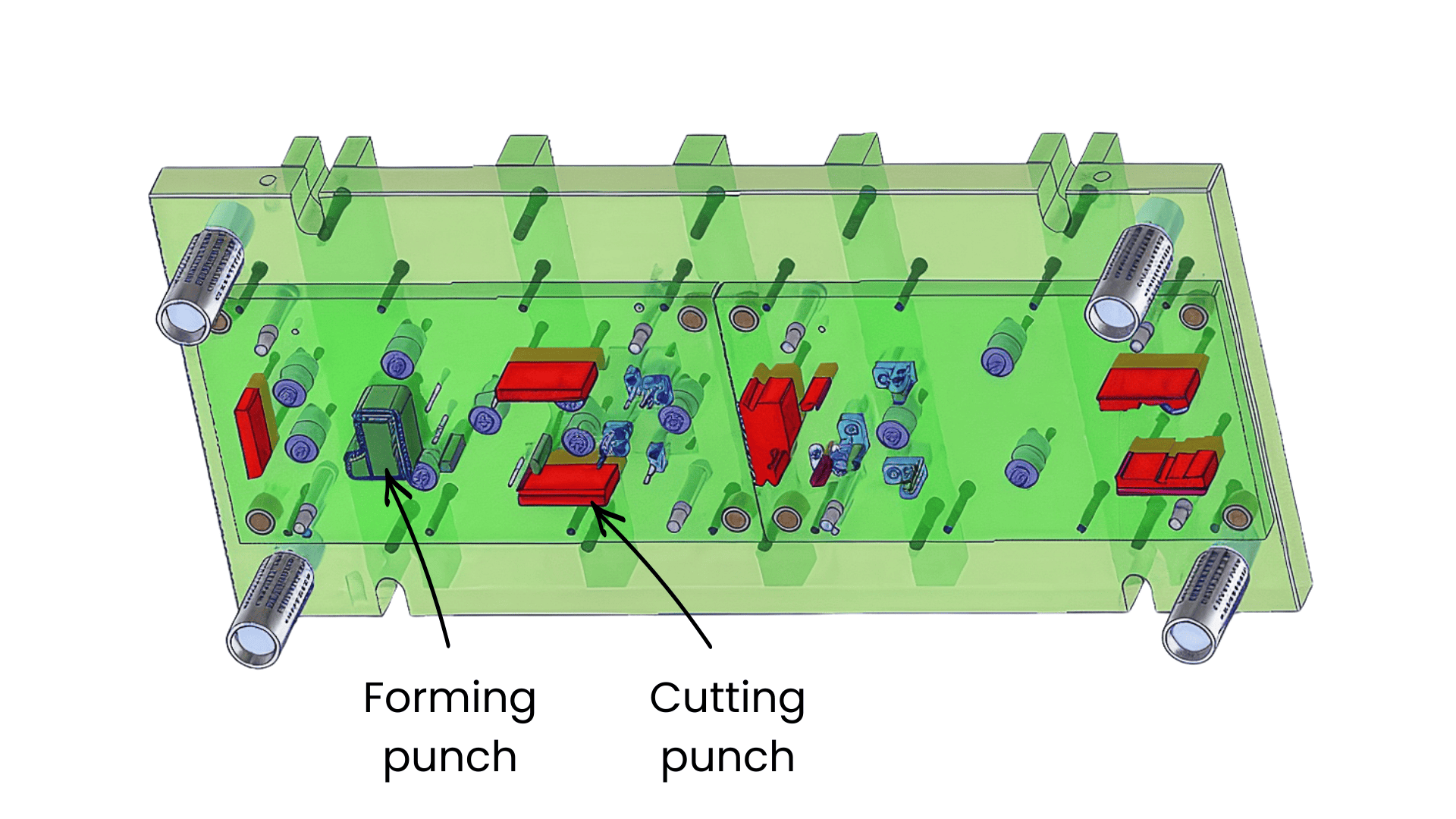
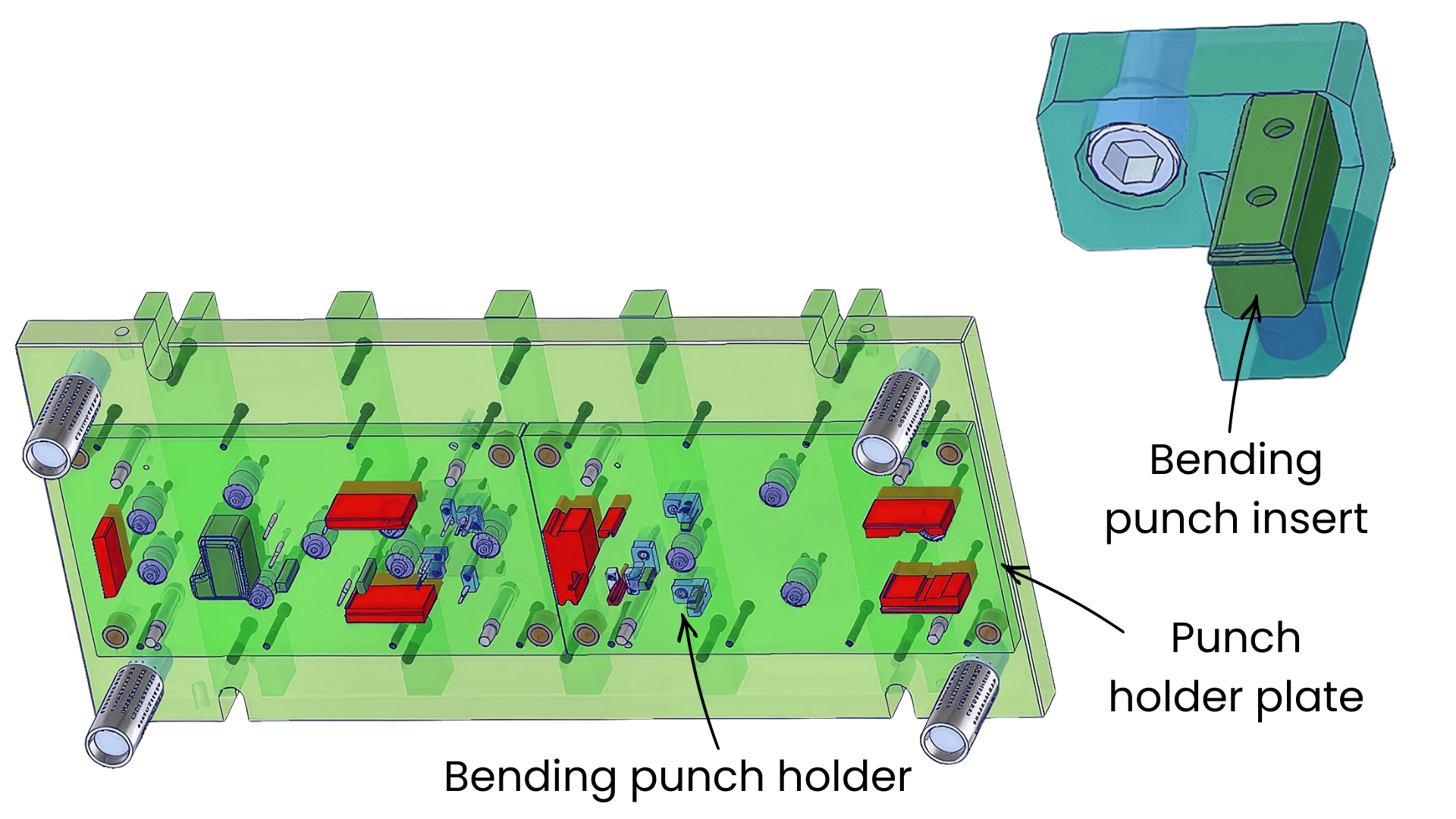
Punches and die inserts are the working elements that blank, pierce, notch, and form the metal strip at each station. Dedicated forming inserts—such as bending, coining, or embossing blocks—shape the part as it progresses through the die, while pilots precisely locate the strip to maintain accurate pitch and feature position.
4. Stock Control & Stripping Components
Stripper plates and pressure pads hold the strip flat, control material flow, and strip the stock off the punches on the upstroke. Stock lifters, rails, and stops help guide and support the material as it feeds from station to station, reducing friction, preventing misfeeds, and improving strip tracking.
5. Retention & Support Components
Punch retainers, backup plates, and die insert pockets securely hold high-wear components in place while providing critical support under load. This design makes it easier to service and replace individual punches or inserts, reducing downtime and extending the overall life of the die.
6. Springs & Force-Generating Elements
Coil springs, urethane springs, and nitrogen gas cylinders supply controlled forces to operate stripper plates, pressure pads, and lifters. Choosing the right combination of springs ensures consistent contact pressure, stable forming conditions, and reliable return of moving die components.
7. Scrap & Part Management
Slug reliefs, scrap pockets, and chutes direct punched slugs and scrap material away from critical cutting areas and out of the die. The carrier strip supports the part as it moves through each station, until a final cutoff operation separates the finished component for collection or downstream automation.
8. Fastening & Adjustment Components
Dowels, screws, clamps, and keys are used to accurately locate and secure every component within the die set. Shims and fine adjustments allow toolmakers to dial in clearances, shut heights, and forming pressures, helping maintain part quality over long production runs.
9. Optional Modern Enhancements
Modern progressive dies often include sensors to monitor strip feed, detect slug buildup or broken punches, and prevent catastrophic crashes. Integrated lubrication systems can also be added to deliver precise amounts of lubricant to the strip and tooling, reducing wear and improving surface finish.
When all of these components are properly designed, built, and maintained, a progressive stamping die becomes a reliable production asset that can run millions of cycles with minimal intervention. This level of integration is what allows stampers like Keats to deliver consistent quality, reduce unplanned downtime, and keep total cost per part competitive.
Conclusion
Dies are the central, critical tools that enable the precision and high-volume efficiency of modern manufacturing. Successful manufacturing relies on partnering with experts who invest in superior, custom tooling. This investment maximizes efficiency in the use of raw material, which promotes higher savings on material cost. Choosing the right partner protects quality, ensures part consistency, and minimizes production risks, establishing high-quality tooling as the heart and soul of a successful operation.
Keats Manufacturing has been providing high-quality custom metal stampings and assemblies for over 60 years, serving nearly every global market. Request a quote today to partner with Keats Manufacturing on your next project and leverage our comprehensive expertise acquired since 1958 in tooling design and fabrication. We offer solutions that provide quality metal parts quickly and at a fair, economical price.