


Metal stamping is an essential process in manufacturing, integral to producing high-precision components across various industries. Understanding the types of metal stamping services available can help engineering and procurement professionals make informed decisions when selecting a supplier. This article delves into the different metal stamping services offered by companies, the processes involved, and their applications, providing a comprehensive overview for those in need of custom solutions.
What is precision metal stamping?
Precision metal stamping is a manufacturing process that involves shaping and cutting metal using specialized dies and presses. This method is crucial for producing components with high accuracy and tight tolerances, which are essential in industries where even minor deviations can lead to significant issues.
±0.0002″
Tolerances for stamping
The importance of precision metal stamping lies in its ability to achieve tolerances as tight as ±0.0002 inches for stamping. These precise specifications ensure that parts fit together perfectly, enhancing the overall quality and reliability of the final product. Companies often rely on custom metal stamping dies designed specifically for their unique applications, further improving the accuracy of the components produced. Keats Manufacturing Co. excels in this area, offering in-house tool and die development with a lifetime guarantee, ensuring that your custom solutions are built to last.
What are the different types of metal stamping?
Metal stamping encompasses various processes, each suited to specific applications and industries. Here are some of the primary types of stamping processes:
- Progressive Stamping:
This method uses a series of dies in a single press stroke, allowing for the continuous production of parts. It’s ideal for high-volume runs and is commonly used in automotive and appliance manufacturing. - Transfer Stamping:
Similar to progressive stamping, this process uses a mechanical actuating system to move the part through the tool instead of keeping it attached to the carrier strip. This allows for better material utilisation and complete workability of the part. It is frequently used in the production of large automotive parts like brackets. - Compound Stamping:
This combines multiple operations into one press stroke, enabling the creation of complex shapes and features in a single step. It’s often used for producing simple parts at high rates of speed. - Four-Slide Stamping:
Utilizes multiple mechanically actuated or servo driven slides to form parts from metal strips. This process is particularly beneficial for creating small components, commonly found in electrical and medical device applications. Keats Manufacturing operates one of the largest fleets of four-slide machines in North America, including unique Wünsch multi-slide machines, which enhance production capabilities for complex geometries. - Deep Drawing:
This technique involves pulling a metal sheet into a die to create deep, hollow shapes. It’s widely used in the manufacturing of cups, containers and automotive parts.
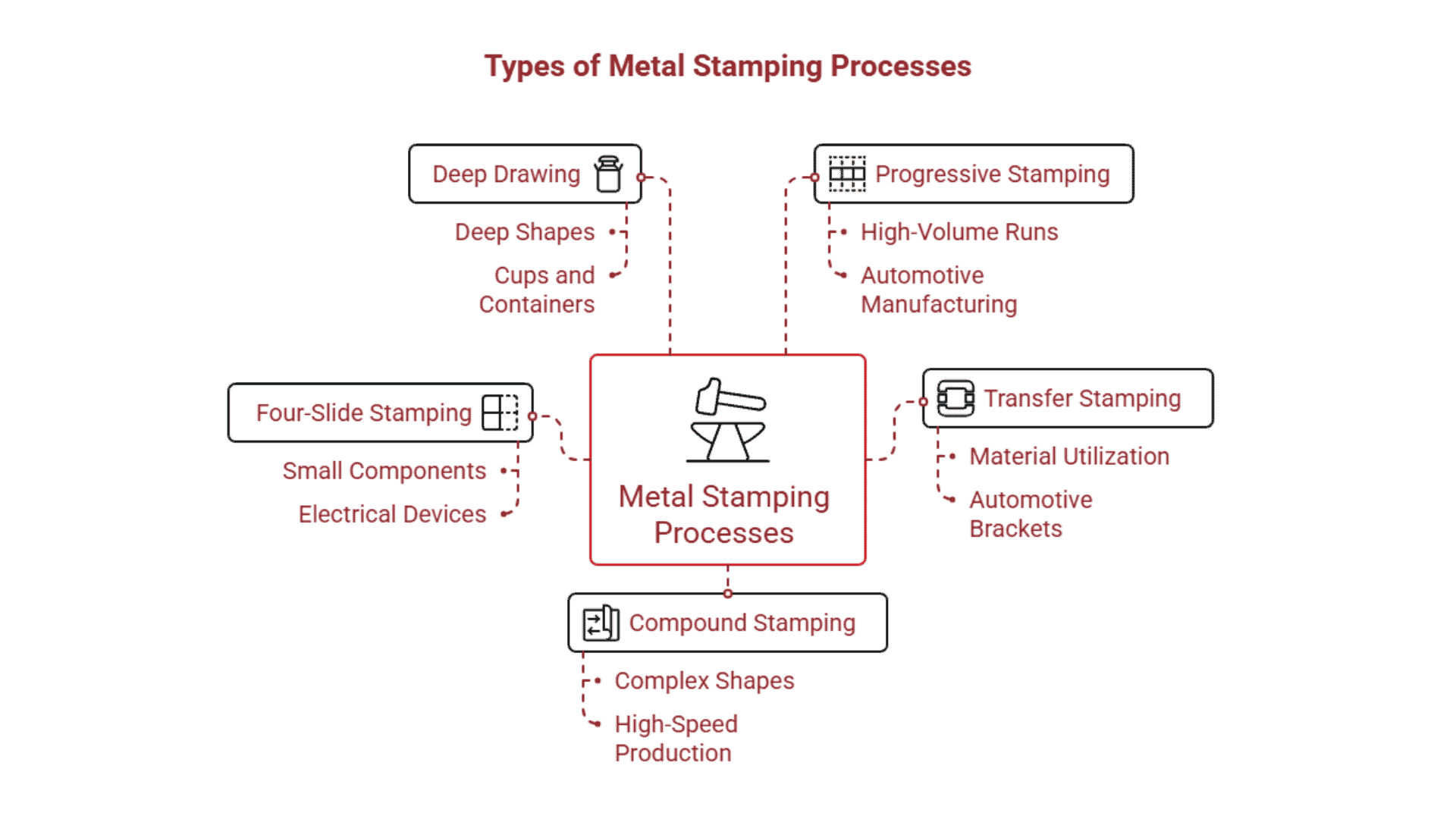
Understanding these processes helps companies select the right method based on their specific needs, ensuring they receive the best possible solutions for their applications.
What are the different types of metal stamping presses?
The choice of stamping press significantly impacts the efficiency and quality of the metal stamping process. Here are the main types of stamping presses:
Mechanical Presses
Most common type, using motor-driven flywheels for speed and efficiency. Preferred for high-volume production.
Servo Presses
Utilize servo motors for precise control, energy efficiency, and flexibility in complex operations.
Hydraulic Presses
Use fluid pressure for high-force control. Ideal for deep drawing and heavy-duty applications.
Each press type has its advantages and disadvantages, which companies must consider when selecting the best option for their specific metal stamping needs.
What industry is metal stamping in?
Metal stamping plays a vital role in several key industries, including:
| Industry | Core Applications |
|---|---|
| Automotive | Brackets, clips, and electrical terminals for vehicle reliability and safety. |
| Appliance | Critical durable and high-precision parts for household appliances. |
| Electronics | Connectors and housings requiring intricate design and high reliability. |
| Medical Devices | Components meeting stringent regulatory standards and tight tolerances. |
The impact of metal stamping in these industries cannot be overstated; it enhances production efficiency and ensures the quality of components that are integral to the functionality of various products.
What are sheet metal stamping dies?
Sheet metal stamping dies are critical tools in the metal stamping process. They are designed to shape and cut metal sheets into specified forms. There are several types of dies used in stamping:
- Progressive Dies: Allow for multiple operations in a single press stroke, ideal for high-volume production.
- Single-Operation Dies: Used for simple parts that require only one stamping operation.
- Compound Dies: Combine multiple operations into one, suitable for more complex shapes.
Understanding the range of die configurations available is only part of the decision process. Our blogKey Considerations When Choosing a Metal Stamping Partner outlines the factors that help ensure those capabilities align with your production, quality, and long-term manufacturing goals.
Custom metal stamping dies are tailored to meet specific application requirements, ensuring that the components produced are not only precise but also optimized for performance.
Conclusion
In conclusion, understanding the various metal stamping services and processes available empowers companies to make informed decisions that enhance their manufacturing capabilities. From precision metal stamping to the different types of presses and dies, each element plays a vital role in producing high-quality components.
Ready to explore the world of metal stamping?
Dive deeper into our custom metal stamping services for expert insights, industry trends, and tips on choosing the right metal stamping company for your needs.